


About Us
Annual Reports
What We Do
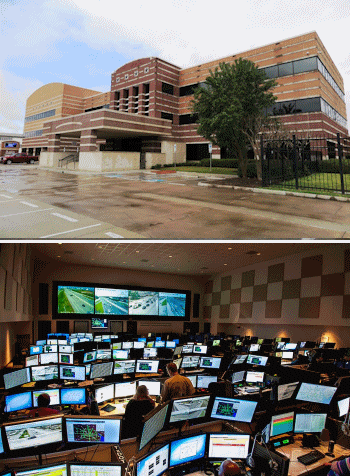
Houston TranStar is a unique partnership of representatives from the City of Houston, Harris County, METRO and TxDOT who share resources and exchange information under one roof to keep motorists informed, roadways clear and lives safe in the fourth most populated city in the United States.
Established in 1993, the Houston TranStar brand is globally recognized for managing southeast Texas’ transportation system and functioning as the primary coordination site for state, county and local agencies when responding to incidents and emergencies.
We mitigate congestion on area roadways using cutting-edge technologies, assist and consult neighboring jurisdictions with traffic management services and offer guidance to various agencies throughout the country, as well as to delegations across the globe, on important transportation and emergency management topics.
A short video on What We Do
Our Mission
The Houston TranStar consortium provides coordinated, innovative transportation and emergency management services to the region.
Our Vision
- Maximize safety and mobility by building, operating and advancing an innovative regional transportation network.
- Save lives and protect property by coordinating large-scale emergency management planning, response and recovery.
- Inform and educate the public about safety, travel conditions and emergency preparedness and response.
Our Goals
- Improve travel safety and reliability.
- Expand and enhance the Traffic Incident Management Program throughout the region.
- Enhance emergency planning, coordination of resources and delivery of information during hazardous events.
- Increase the public’s awareness and use of our services.
- Ensure sustainable financial resources for TranStar operations.
Transportation Management
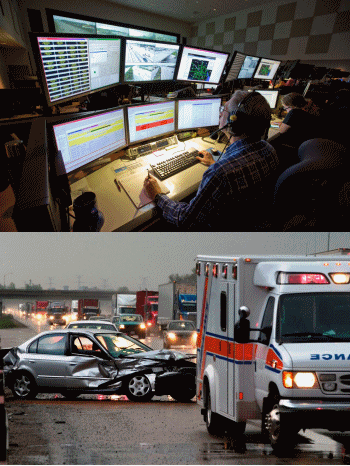
At the core of TranStar operations is the Transportation Control Center, where partner representatives share access to state-of the-art monitoring systems to quickly identify problems, manage responses and provide the public with real-time traffic information for avoiding delays and improving safety.
A short video on how Houston TranStar manages transportation in the region
Houston TranStar, a national leader in freeway incident management, uses state-of-the-art technologies to reduce congestion on major roadways. Monitoring traffic incidents with more than 900 regional Closed Circuit Television Cameras (CCTVs), staff at the TranStar center dispatch vehicles to remove debris or hazardous materials, communicate with emergency vehicles about the most direct routes to an accident scene, and send tow trucks to stalled vehicles. Dynamic Message Signs (DMS), deployed from Houston TranStar, inform travelers about expected travel times and traffic issues ahead. Synchronized traffic signals, speed sensors, Highway Advisory Radio, ramp meters and other devices also help keep the region’s traffic moving.
Emergency Management
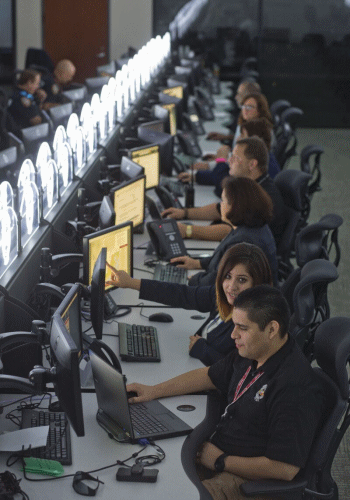
TranStar was the first center in the nation to combine transportation management and emergency management to improve public safety during natural and man-made disasters. Take a look inside the Emergency Operations Center to see how coordinated, advanced planning saves lives in a service area with more than six million people.
A short video on how Houston TranStar manages emergencies in the region
When emergency conditions arise such as hurricanes, floods, industrial explosions or terrorist attacks, the Emergency Operations Center (EOC) at Houston TranStar is activated. Representatives from all four collaborating agencies—as well as such diverse entities as the U.S. Army, Salvation Army, Harris County Toll Road Authority, Amateur Radio Operator volunteers, the American Red Cross, and area local governments—come together to coordinate a quick, effective response. The Automated Flood Warning System, Doppler Radar Imagery, Satellite Weather Maps, Road Flood Warning Systems and the Regional Incident Management System (RIMS) comprise some of the tools used to address the emergency.
Leveraging Resources
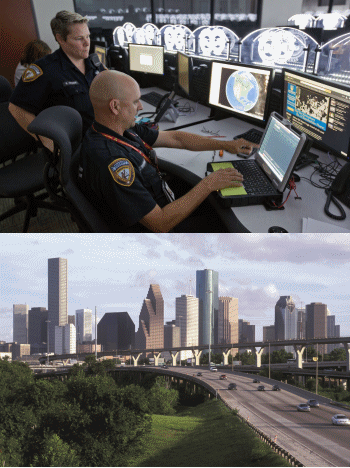
The benefit of having multiple agencies under one roof for pooling information and resources gives Houston TranStar partners an advantage over other agencies who work alone. Because of joint transportation projects, combined emergency response efforts and general day-to-day cooperative operations, TranStar enjoys a worldwide reputation for innovation and efficient use of resources.
A short video on how TranStar is leveraging resources
TranStar’s collaborative partnership has eliminated costly duplication and saved billions of taxpayer dollars. Shared access to the latest transportation management technologies and life-saving communications means faster and more efficient response to the region’s transportation and emergency management issues.
Innovation
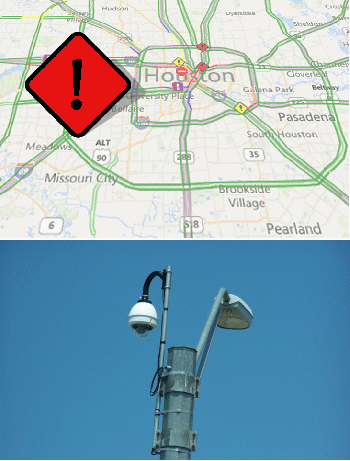
Houston TranStar was the first center in the nation to combine Transportation and Emergency Management centers, and the first to bring four agencies together under one roof. Houston TranStar’s web site, nationally and locally recognized for the breadth of information it offers the general public, allows subscribers to receive personalized travel time updates and incident warnings, as well as providing up-to-the-minute traffic and weather information.
A short video on Houston TranStar and innovation
State-of-the-art technology has fueled TranStar’s pioneering success and continues to benefit motorists every day. Use its real-time traffic map to plan routes and save time. Receive personalized email alerts or texts or subscribe to Twitter to receive traffic alerts. Download the free mobile app for Android or iPhone to get TranStar traveler information on your mobile device.
Houston TranStar pioneered the use of traffic monitoring using Anonymous Wireless Address Matching (AWAM) . AWAM currently uses anonymous addresses from Bluetooth™ network devices to identify probes and calculate travel times and speeds on instrumented roadway segments. This innovation allows Houston TranStar to provide travel updates to drivers during daily commutes as well as in emergency evacuation situations.
Frequent heavy rainfall events make roadway flooding a concern for travelers throughout the Houston region. Houston TranStar, in cooperation with the Harris County Flood Control District's Flood Warning System, has developed a roadway flood warning system to alert travelers of areas where roadway flooding risk is high during rain events.
Partners

Public and Private Partnerships
Motorist Assistance Program
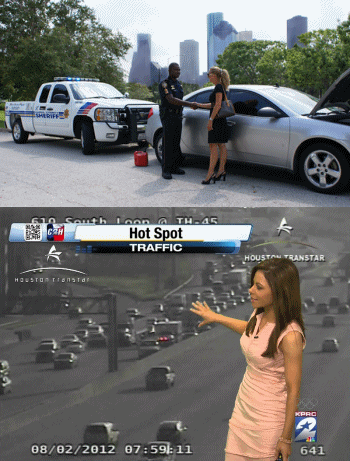
The Motorist Assistance Program (MAP) is a partnership between the Harris County Sheriff’s Department, METRO, The Texas Department of Transportation, the Houston Automobile Dealer’s Association and Cingular Wireless Telephone Company. The Motorist Assistance Program is a traffic management strategy that utilizes 16 vans and trucks to assist more than 36,000 motorists every year with minor vehicle problems that impede the flow traffic on Houston area freeways. They assist motorists with changing flat tires, provide fuel or water, assist with minor engine repairs, jump start vehicles and transport motorists to safe locations.
Media
Houston TranStar has established a multi-media partnership with the major news outlets in Houston, Texas (the 11th largest media market in the country). Houston TranStar’s Closed Circuit Television images and Automatic Vehicle Identification (AVI) speed data can be seen on ABC, CBS, NBC, News 24 and FOX seven days a week, 365 days a year. Houston TranStar also provides other outlets including Metro Traffic Network, Navteq Traffic, and the Houston Chronicle with traffic and weather-related information so citizens of the region can be kept up-to-date on current driving and weather conditions.
Benefits

Houston TranStar’s benefits are well-documented and quantified by the Texas A&M Transportation Institute, the transportation research arm of Texas A&M University.